

I just posted this to www.roadtocolossus.com but decided to double dip. I'm oh so lazy now...
Opening night at the Museum went well beyond our expectations. Most importantly the movie played without crashing, glitching, having the sound cut out, or having me fall off the digital bike into the laps of those in the front row. Secondly, we packed the house! It was a very euphoric feeling to look out into the theater and then have to get up there and perform with Caedron. Which leads me into the performance element of the "screening."
As some of you may know, I can't just stick to one mode of art. I can't just show a movie, like I can't just hang a painting. So all along I've been looking at this documentary as a way to create an environment that deals with ephemeral performances-much in the same sense as buZ's icon dispatches on the railroad. So in deciding to take the movie on tour I wanted to perform with it just as if I was a band playing in a friend's basement or an athlete performing at a competition. More so I wanted the performance to put the film into a higher context where it could be metaphorical, physical, but mostly evident of a larger relationship between me, the film, and the idea of searching. 
The idea of manipulating a bike so that it could control video frame rate was my initial goal with the performance. After months of working with Ben Tedore at the Univ. of Nevada Reno's Digital Media dept. and Pete Froslie at the Univ. of Massachusettes, the first digital-bike was up and running. I bought a roller training contraption on ebay that allowed me to ride stationary but still assimilated real riding sense one had to balance on it. The first bike alteration involved zip-tieing a magnet to the crank and a magnetic switch sensor to the bottom bracket that allowed us to capture an analog signal and convert it to a digital signal. These signals travelled through a microprocessor and into a laptop running a program called Max MSP/Jitter. 
Ben built a patch for the program that would then read the rate of my pedaling and apply that to a looped video of a train line passing. This video was projected during the screenings on a separate screen that appeared in front of me as if I was constantly chasing the train line. The digital bike then affected the video's speed, so the video would speed up if I slowed down on the bike and slow down if I were to pedal faster. This mirrored real life where it would seem as if one could catch up to a train only if one were to pedal fast enough. However, the continuous looping of the video and my pedaling endurance made it unmatched and completely unfair. Damn computers!
Since the movie is broken up into two sections-the road to colossus and the colossus of roads-I decided to pedal along with the beginning half of the film. By biking alongside larger than life projections of Derek and I biking it felt surreal and connected. I tried to let the dialogue and mental state of the characters govern my riding speed and at times became completely transfixed, as if in deep meditation, on the act of riding. 
Before the digital bike made its debut I worked with Caedron Burchfield on an introductory performance that we performed only at the Nevada Museum of Art. Beginning in darkness Caedron approached the center stage with a staph in hand and self-made ceramic helmet. From the black of the stage the audience heard Caedron begin a mantra/poem/spoken word of sorts about the railroad that continued for 3 minutes. The subtle sound of train cars drifted into the environment and I began riding a vintage English bike on the stationary rollers across from him. On my bike was an old-fasioned light generator that illuminated him as soon as I began riding at a decent pace. As the light from my light struck his face a wireless video camera attached to his staph projected it's recording of his face at real-time onto the large projection screen behind us. As I rode faster the intensity of my light increased and in doing so increased the brightness of the real-time projection. At the end of the performance Caedron turned from facing the audience to facing me. As he turned towards me, my light projected through a stencil of a traincar and a key that were attached to his staph and became magnified and illuminated on the museum wall. I began riding slower and the light gradually dissolved. The stencil projection dissolved. Caedron's real-time projection dissolved. The performance was over.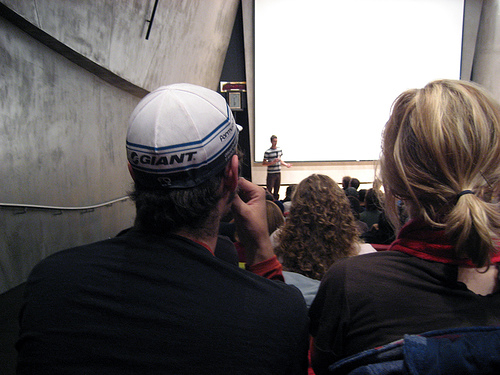
November 29, 2006
Digital Bicycle
November 26, 2006
The Mansion
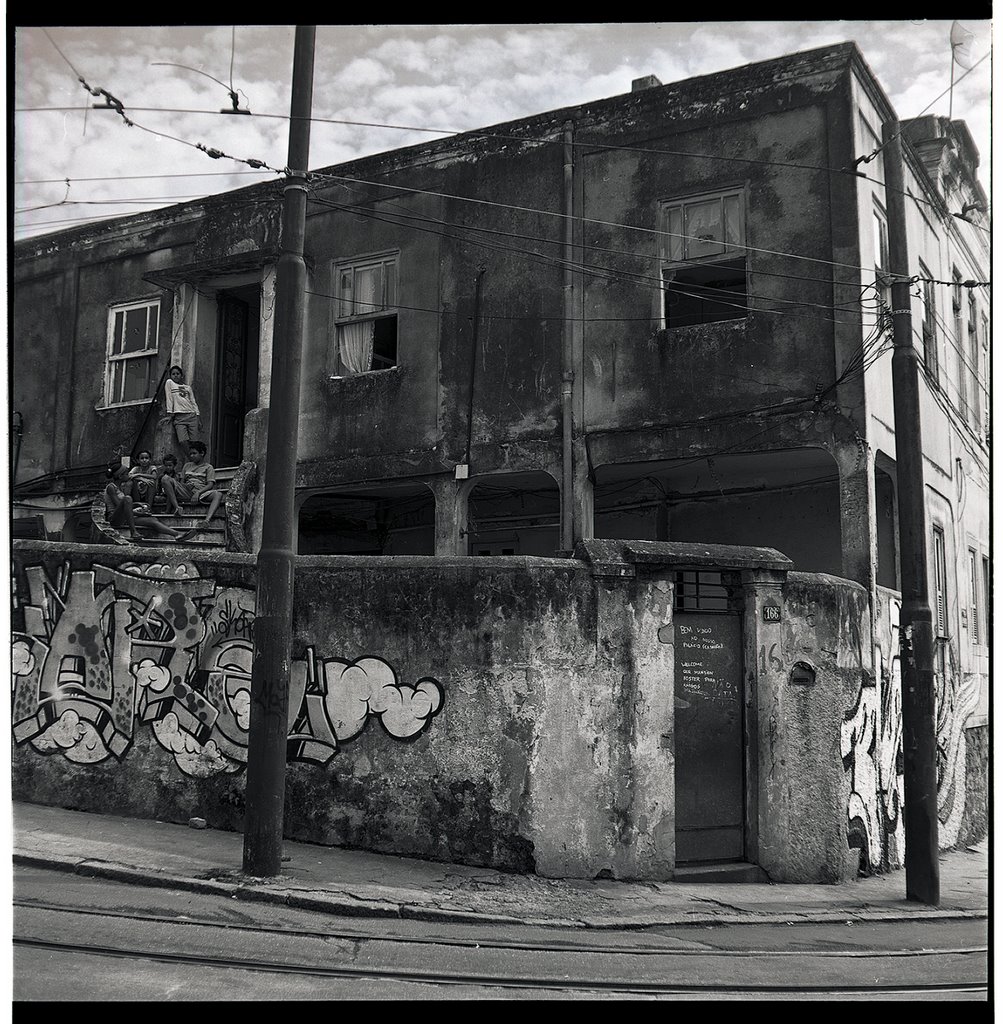
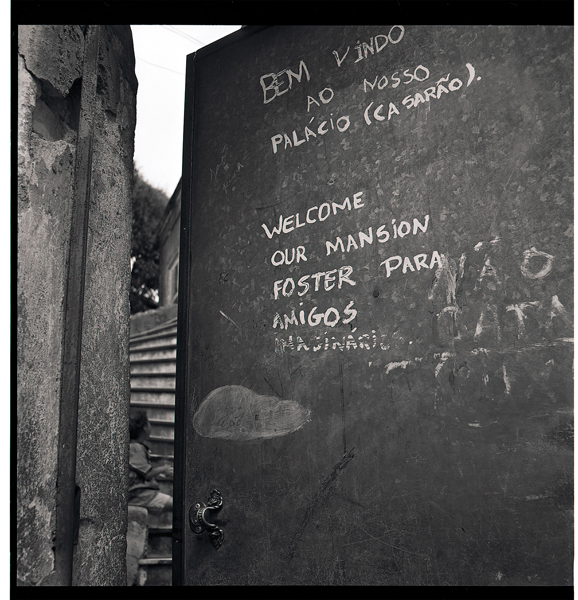
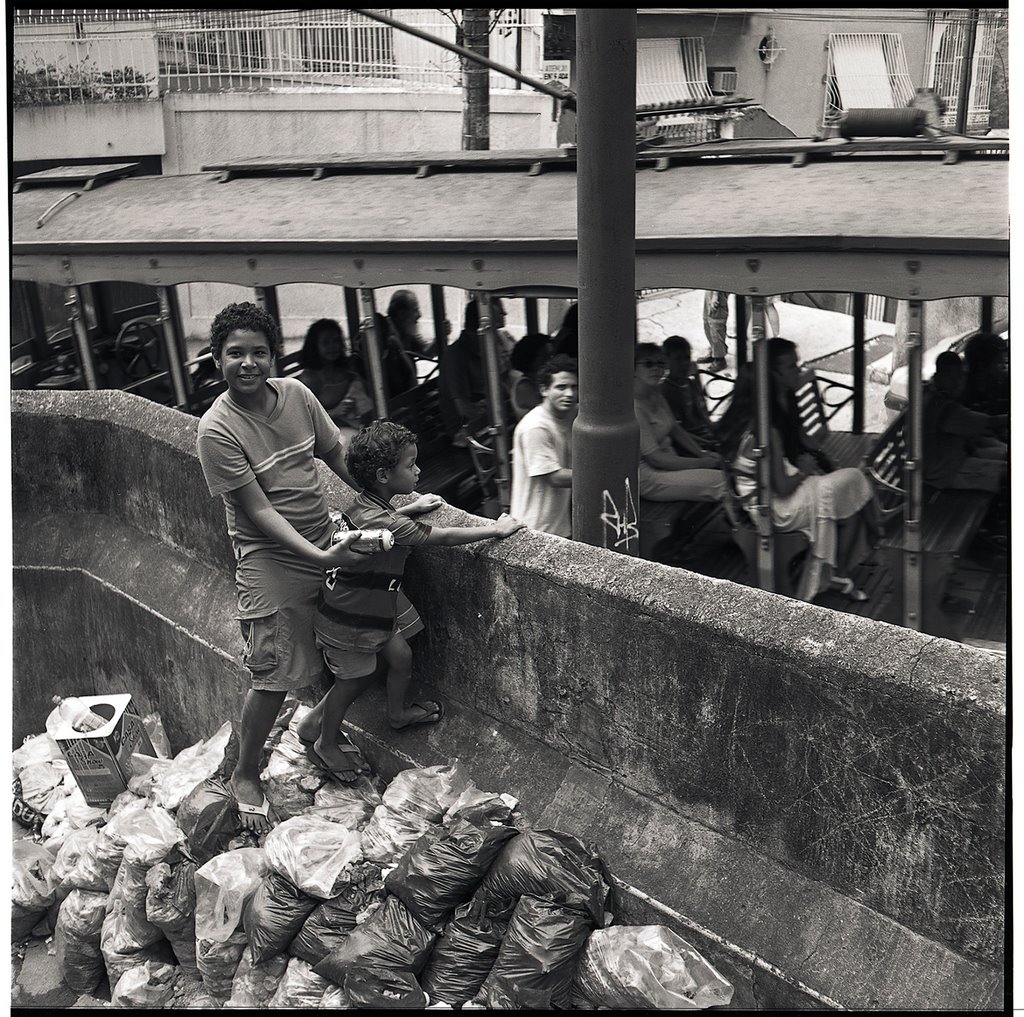
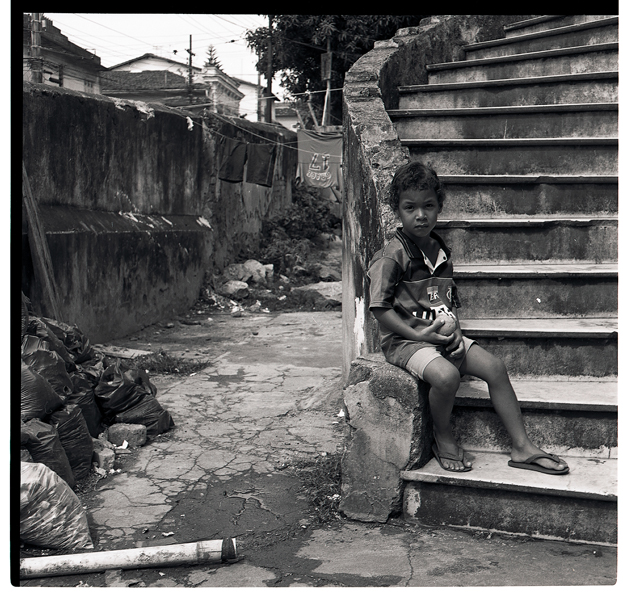
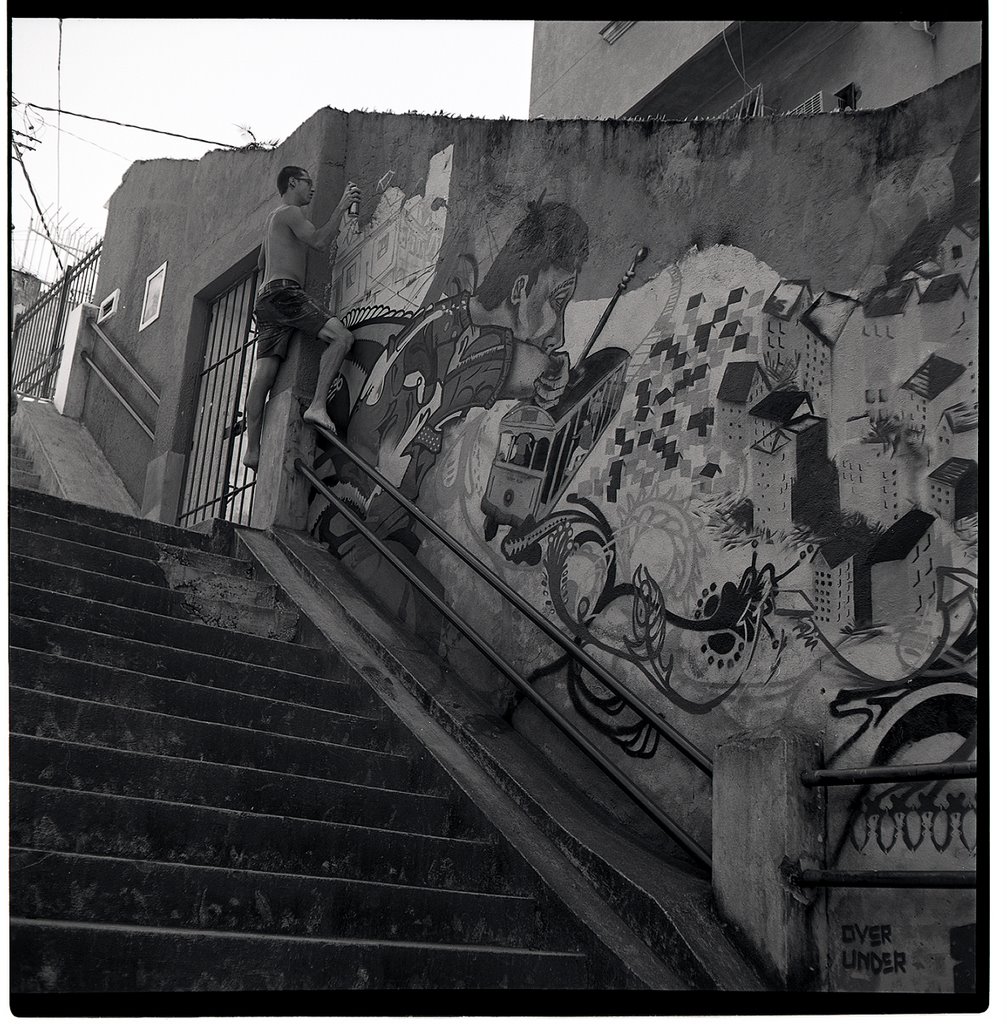

When Rochambeaux and I went to Brasil we ended up staying with a scultor named Wanderlay Fiueiredo. He had a modest home with an influx of tourists, which we were, that he gave cama e cafe (bed and breakfast). Across from his home was a huge and decrepit house. All the houses in the Santa Teresa neighborhood were like that, except this house had twenty-something shouting kids on the stoop at all times of the day and night. After hearing gunfire from the nearby Favela throughout, what seemed like an entire night, Wanderlay told us not to go out at night with our cameras because neighbor-
hood kids would mug us. Somehow everyone we met had a mugging story and it seemed like our turn was right around the corner. Or maybe across the street.
Throughout the week as I painted Wanderlay's wall I befriended a few of the mansions inhabitants. The frist group were just some young rufians who seemed to never have school, work, or a family to go home to for dinner. After a few more days I was invited inside-which I accepted hesitantly. I quickly learned that this house was an apartment complex where the owner had died. Without a landlord, the tenants invited the rest of their families over to live and slowly turned the place into a commune of sorts. Except for some reason it was almost entirely over-run with kids. 49 kids to 3 adults. I learned about this when one of the kids told me I could paint there house. The graff side of me accepted on the spot, bu the strangely-new mature side of me decided I better run it by the owner or parents first. This is when I learned that the only parents were a woman who sold black shrimp out her window, a drunk older uncle who seemed to only have teenage friends, and a woman who sat in her window smoking all day.
Within the next few days I made friends with the kids. Showed them how to take photos with my Rollei. Drank beer with them. And even provided a design which quickly reintroduced itself as a tattoo the next day. The Foster and Imaginary Friend Mansion became my asylum during the last week of my Brasil trip.
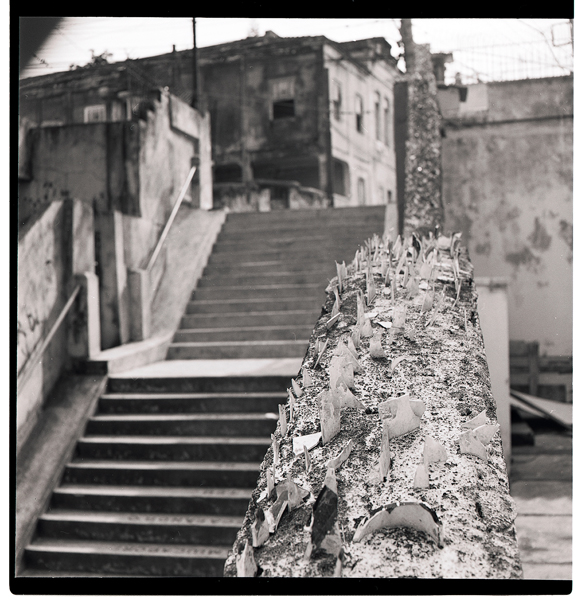
Now I daydream of going back to stay at the Mansion and work with the kids. I can't say why but I felt complete those days amid the chaos of crying babies and weighted clothelines. 
November 21, 2006
Eastern European Christmas
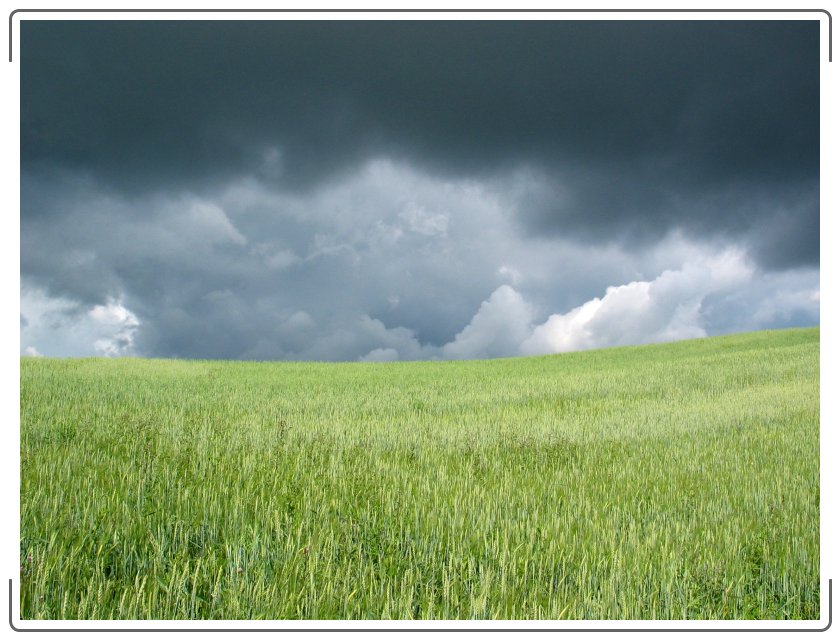
Just bought my ticket and I'm off to Tallinn, Estonia. Now I'm certain to have snow on Christmas. And 6 hour-lit days. The absence of light should just heighten my chronic insomnia -or atleast lend an excuse. Regardless, I'm leaving the 24th and the only present I'll be unwrapping is the Frankfurt runway Christmas morning, then it's just a quick flight in to Tallinn. Right there, that little city in the red box. 
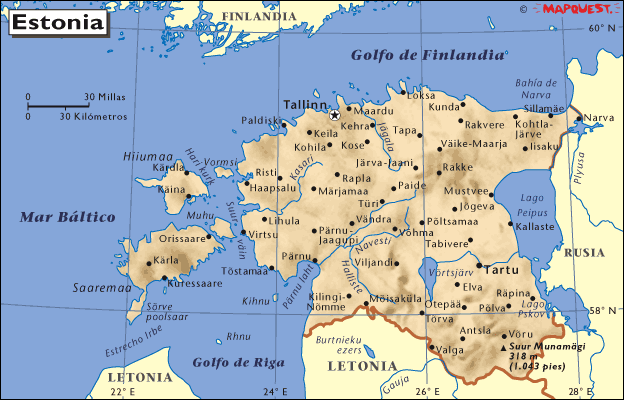

and check out this amazingly creative flag. It basically sums it up. Ice on everything with dark days and a slight chance of blue skys. Slight! So come on, I mean who wouldn't like Estonia.
November 20, 2006
Dot Masters
A recent festival in Stavanger, Norway entitled NUART brought the Dot Masters to my attention. Below is a description of their reclamation of icons for further debate and debauchery.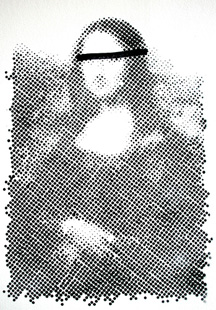
Mona smiles
As vandals strike in gallery attack
The Dot Masters present a series of curated popular fine art masterpieces for the urban environment. The twelve-month project will see classic images from the world of fine art, half toned, stencil cut, then sprayed and defaced in and around urban city centers. The season kicks off with MonaDot an oversize rendition of the Mona Lisa developed in New York in a transatlantic collaboration between C6 and GRL.
Why certain works lend themselves to endless popular reproduction is a complex one. The creation of these iconic visual stars has been dependant on historical, political and financial variables; factors which when broadcast through various media ensure that these images keep their elevated public status. Even the remix and appropriation of these images is guaranteed by the nature of their supposed divinity.
Graffiti is an act of vandalism. Does making the subject of that criminal damage an image of merit question its classification as a crime? Can beauty be used to damage property? Is the vandalism of a white wall greater than the vandalism of the image?
As the worlds of graffiti and fine art collide the dividing lines become blurred. The crime becomes a valuable commodity steeped in credibility for those involved.
Attitudes to graffiti have changed; the media's coverage of certain graffiti stars has resulted in the reporting of graffiti as tales of daring acts. The small man against the big corporation? Big deals are made in both the corporate and fine art worlds as companies and celebrities jostle for attention. Prints and ephemera change hands forever increasing sums as ebay spawns a new generation of bedroom art dealers. Names are widely known and brands created by artists currently engaged in a practice still categorized by law as vandalism.
It is ironic that there are supposed police task forces employed to document and pursue these artists, yet dealers and celebrities find it easy to court the attention of these nameless hardened criminals? Have the streets have become a wider arena for expression? Are cultural practitioners taking back the space that has previously only been in mainstream media's control? Or are their goals the same? Diverse tactics, styles and messages separate these invasions of territory as the media savvy battle with kid scrawlers, billposters and the law.
Galleries will be targeted in this worldwide stencil campaign, which during its first week, rather by accident than design, the first targets were London, UK and Stavanger, Norway. Other locations will be added along the way with cultural centers galleries and media savvy spaces bearing the brunt.
The public is invited to report on the removal and cleaning of these works in an on going survey of gallery curatorial policy. A goggle map tour of these sites is in development and the public is requested to call the buffing the hotline on +447092809377 specifying where and when they saw a Dot Master disappear.
November 14, 2006
Reno Bike Project (EVENT)
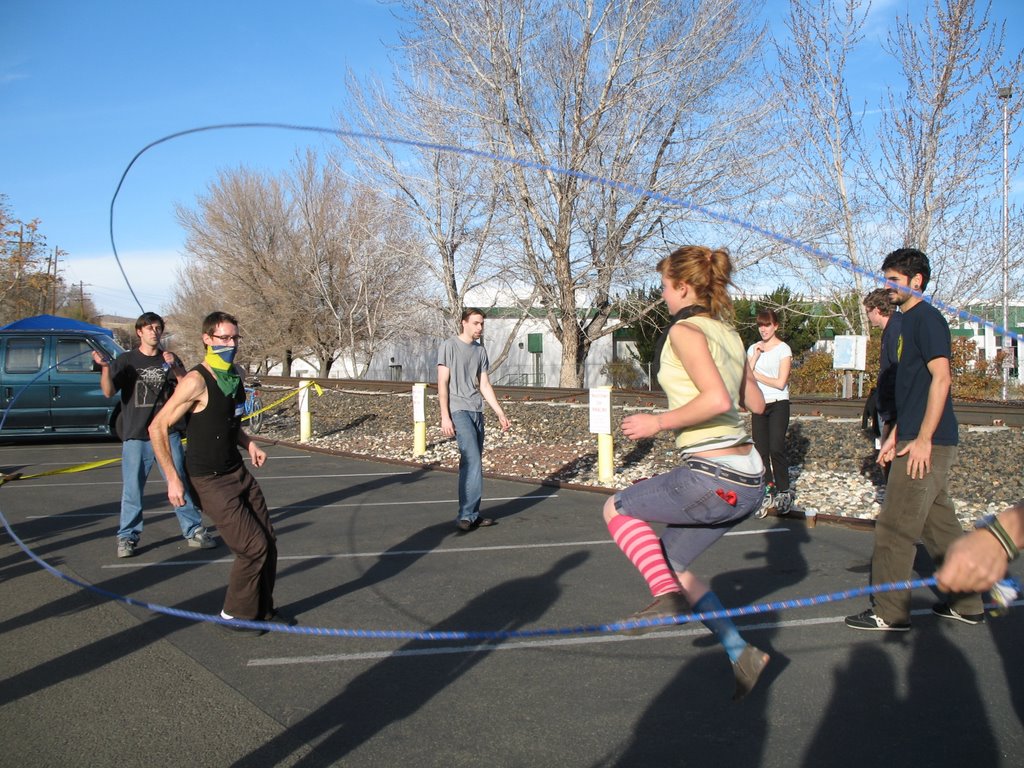
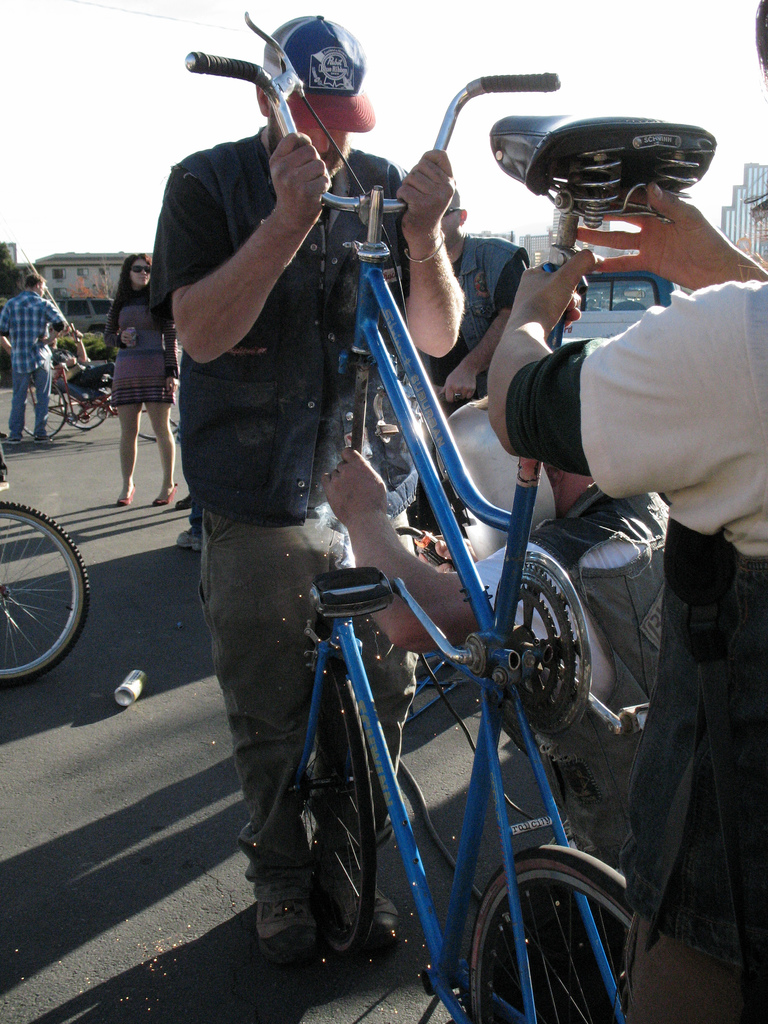
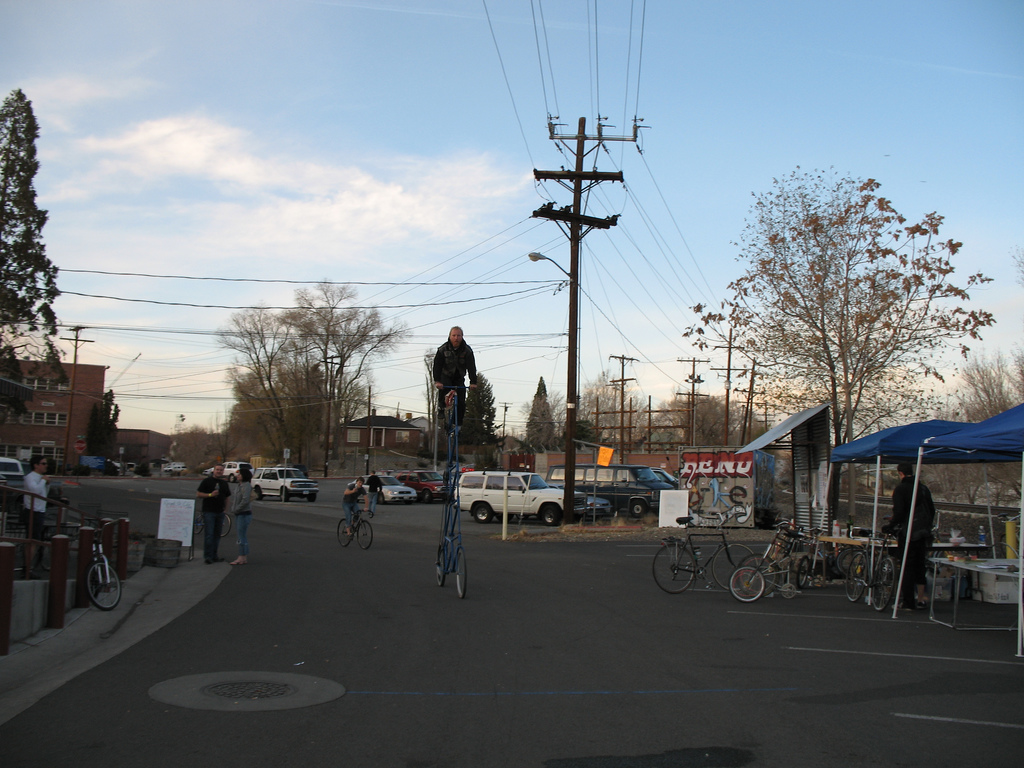
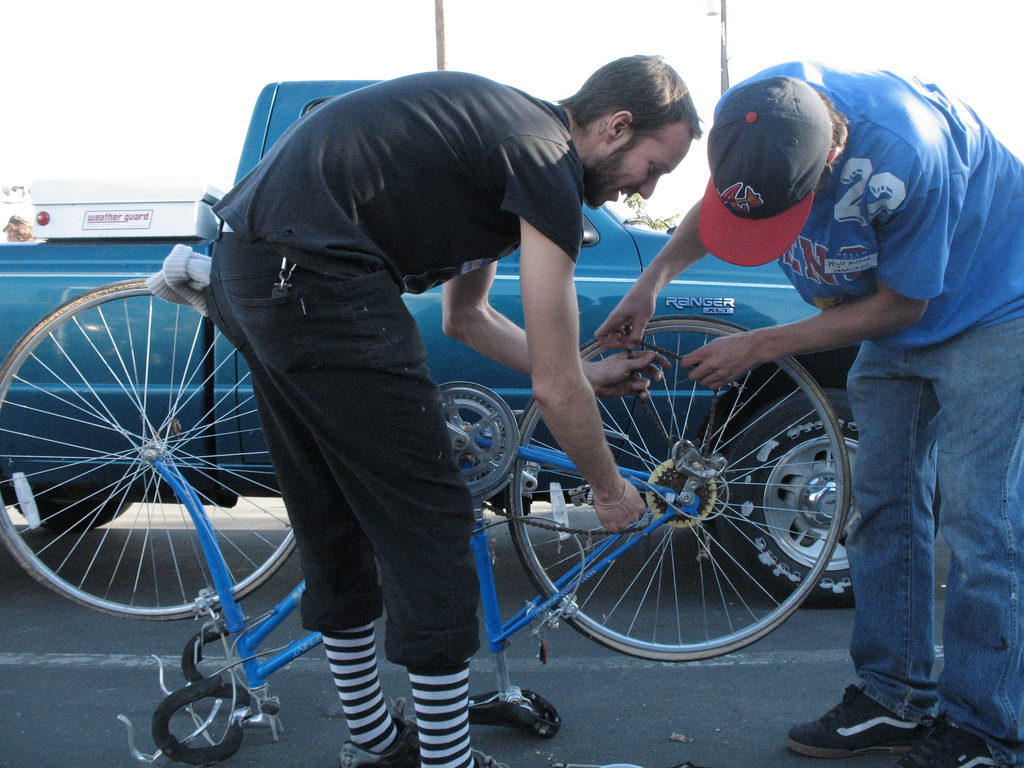

Don't miss out on the Reno Bike Project's event this Saturday, the 18th @ Record St. Cafe. Plenty of fun, events, people, and bike education. And if you didn't see the front cover of the Reno Gazette Journal yesterday check this shit out. And I highly recommend that we all write the author (lpowers@rgj.com) of the article a letter about how the article was handled. In my opinion the article brought in Dan Brown's argument totally out of context and instead of celebrating creating more alternative ways of transportation it demonized it by calling it a trend. 'It' being fixed gear bicycles, which is not what the article or the co-op is even about. 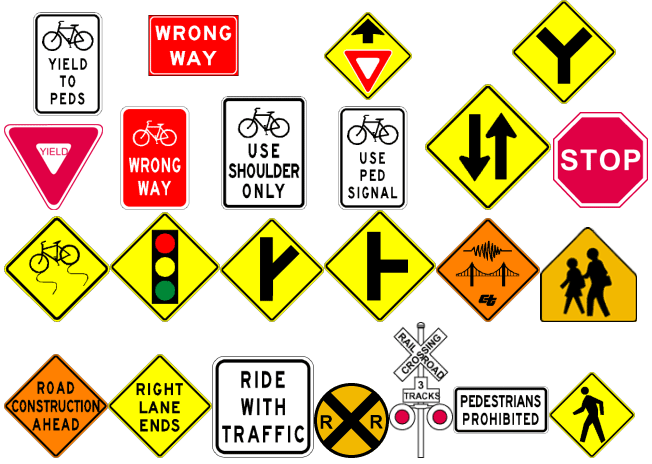
I also went to the online version of the article and read the comments block. Although everyone seemed to be commending the efforts of the bike co-op, the major and collective concern was that of safety. Ironically enought no one seems to be concerned with the long term effects that automobiles and our construction of cities have on our health. If people really are concerned that a bike co-op will lead to more bicycle related injuries and even death I think the major concern is not bicycles but car culture. How can we build a safe bicycle city? What is it about the seemingly dangerous wet cities of Portland and Amsterdam that lead to such a vibract, healthy, and safe city for bicyclists? How can we create bike lanes and what streets should be prioritized for bike lanes?
Although I understand and emphatize with people's concern for safe cycling I think that by creating a presence of bicyclist we will slowly introduce new urban etiquette to drivers, bicyclist, and pedestrians.
Criminal Mass
Those of you who didn't attend Gold Front's Criminal Mass show this past weekend should feel ashamed. Not only did the costumes improve, the raps get more on beat, and the sickle more pungent, but the toes even got touched by many if not all. The night started off blistery with Icelandic Rob even wincing. After a few Ol' Glory's the Christina tide washed over us all and we decided to picket our own show. After all, we would not stand for such a debauchery of music in the name of that god awful sin called rap. 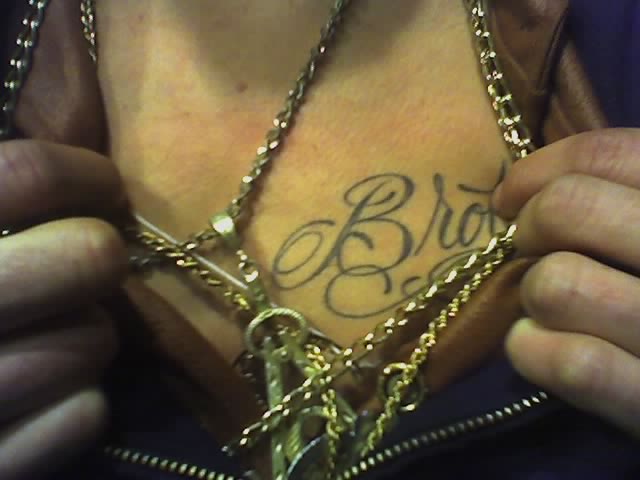
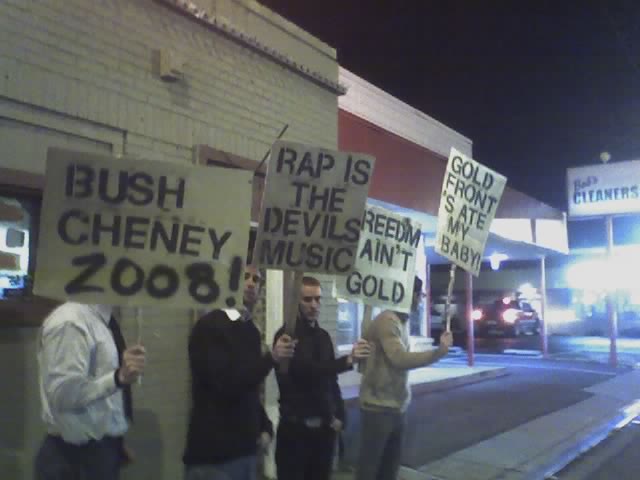
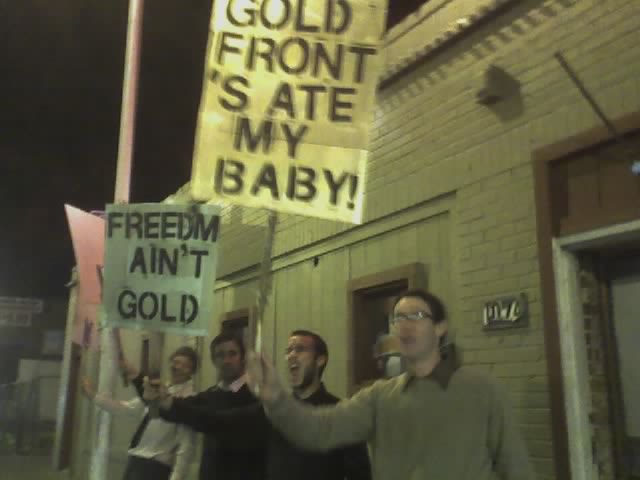
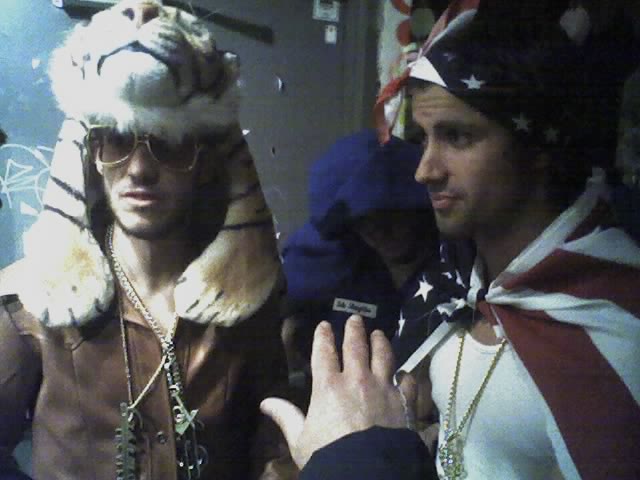
The picketing went in waves and caused a few close fender benders on S. Virginia St. Whynot captured most of the chants such as 'Vote Bush / in 1008' and 'Rappers are sinners / and no ones a winner' along with 'buy a Hummer / cut more lumber' and the obvious ' Gold Fronts / Go Home!' After the crowd was thoroughly riled to a furvor Crunkyard removed his priest robe to present pure gold. I'm talking 420 kt. So to did Snortin' Rocks, Sex Nightly, Skinny Dip, Nate Watson, and even yours truly Gutta' Junk. The Rocky theme music came on in a triumph of shadow punches and Criminal Mass entered the ring. After this people just got annihilated and if you weren't there you don't deserve to hear about it. But instead you should come to the Reno Bike Project fundraiser on the 18th at noon @ Record Street Cafe. Not because Criminal Mass will play, which they won't, but because you owe it to yourself as a lowlife procrastinater and probably are talking right now about how Reno has no culture. Yeah, you're right. It doesn't. Especially when you're sitting at your house complaining to your friend about it.
RECOGNIZE
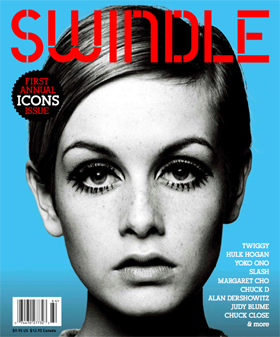
Swindle magazine just released their new issue entitled Icons. Guess who was up there with Yoko Ono, Chuck Close, and Ian MacKaye? Yep, buZ blurr. Pick up your copy today.


 Posts
Posts


